Support Indigenous Artisans with Every Purchase and donation.


Life and economy of the regions Jalq'a and Tarabuco (Yampara): The Yampara and Jalq'a regions are described as regions marked by small farms, land erosion, dry land production for own consumption, with minimal trade and no cash alternative income
The Jalq'a are situated in the North and West of the city Sucre, in both the province of Oropeza (Department of Chuquisaca) and the province of Chayanta (Department of Potosi). Numbering ap-prox. 26,000, the Jala'a live between 2500m and 3000m above sea level, farming land significantly poorer in quality than that of their neighbors, the Tarabuqueños.
Region Jalq'a
Textile communication
In our daily lives we have to make many choices. Even with simple things such as what to eat, which brand to buy, and what to wear. The choices we make especially when it comes to clothing is very important, as textile is something close to our skin. It serves as a canvas, projecting our feelings to the outside. Clothing can also mean group affiliation. It tells other people how you feel or how you want to be seen. In this way textiles communicate with others. Before the Spanish invasion, the Andean cultures had no letter system. Their way to exchange information was through textiles. Patterns and colors told stories. The Jalq'a textiles from Bolivia are very figurative and therefore invite readers to interpret them, to read them. They tell stories of life, festivals, the present and history and the past, tell wisdom and fairy tells. With some background information you can travel into the world or the campesinos (farmers).
Ukhu Pacha
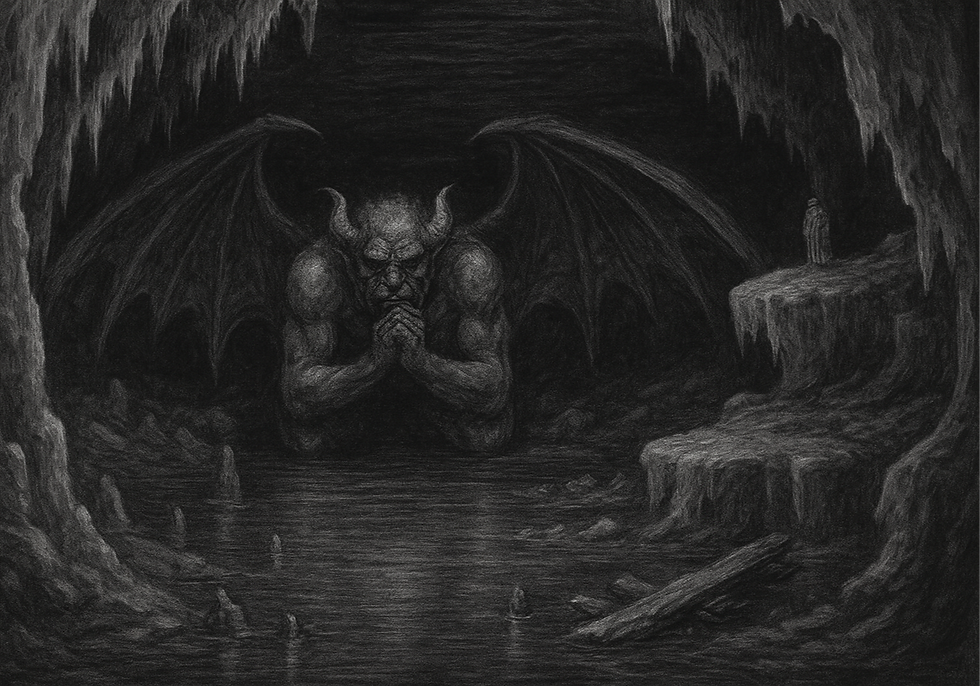
Ukhu Pacha is that of the "ukhu pacha", a sacred world described by the Jalq'a as one of depths, remote places, and diffuse light. Using only colours which absorb light, the pallays form a vacuum, adding to the darkness and confusion of this world repre-sented. With the pallay forming a continuous fluid space, there remains no one single angle of vision or lines of horizon to orientate the eye; instead, the ukhu pacha is a chaotic disordered space, a world of dark-ness, death, dreams, restlessness, fear and multiplication, peopled with the unknown, and the non-existant. The strange figures the Jalq'a weave are called Khurus, mythical beings that the lalq'a believe appear to one when alone and in a remote and solitary place. From a very young age Jalq'a children are told stories about the creatures that populate the weavings; throughout their lives khurus evoke fear. However, by weaving these fantastical figures, the lalq'a pallay can be seen as a way of conquering this fear, by transforming these terrifying figures into aesthetic ones.

Jalq’a Textile
A chaotic disordered space, a world of darkness, death, dreams, restlessness, fear and multiplication peopled with the unknown, the non-existent. These figures, these untamed wild free falling subterranean animals are Khurus. The Jalq'a believe they appear to one when alone and in a remote and solitary place. From a very young age Jalq'a children are told stories about the creatures that populate the weavings; throughout their lives Khurus evoke fear. Weaving these fantastic figures is thus not only a way of conquering fear but of transforming fear into aesthetic. There are three types of Khurus
• imagined or non-existant
• known but rendered unreal (horses, cows, birds)
• animals whose representation is closer to reality
Defying laws of gravity, the twisting, overlapping profusion of Khurus serve to confuse the eye. It is never quite clear where one Khuru ends and the other begins, whether one is looking at the background or the figure itself.


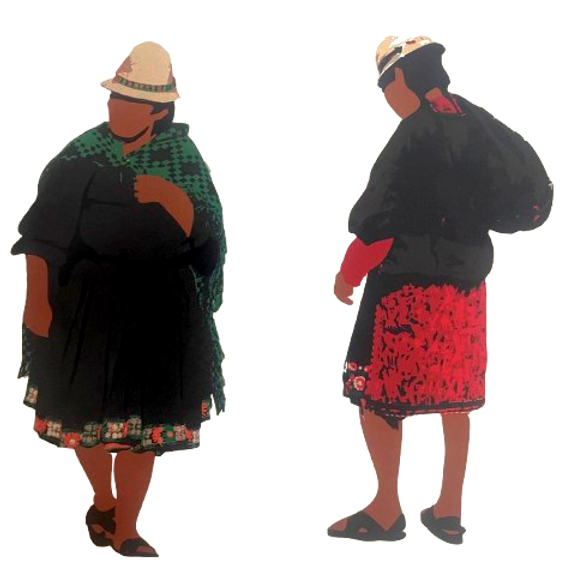
Sombrero
The same as that worn by Jalq'a men, it is styled like a white bowler hat, with coloured decoration.
Axsu
The weaving which covers the almilla, fastening at the back.
Sandalias
Sandals made of rubber tubes
Chumpi
A woven belt, this is used to secure the loose almilla, and asxu. However, it also serves as a sash that ensures that newborn babies are carried properly, by tying their limbs in such a way as to protect their posture and bones.
Almilla
Similar to the almilla worn by Yampara women, this is a large, black shirt, with three-quarter length sleeves. Co-loured borders with flower decoration adorn the sleeves, neckline and hem.
Llijlla y topo
A wide shawl, which hangs off the back or is tied to carry loads.
Female Clothing